
Weak enforcement results in Rs 15,000-cr of imitations sold annually.

After turning net buyers last month, foreign investors have become aggressive shoppers of Indian equities and have invested Rs 22,452 crore in the first two weeks of August amid softening inflation concerns. This was way higher than a net investment of nearly Rs 5,000 crore by Foreign Portfolio Investors (FPIs) in the entire month of July, data with depositories showed. FPIs had turned net buyers for the first time in July, after nine straight months of massive net outflows, which started in October last year.

10 high dividend paying stocks across sectors that are expected to maintain or even increase their pay-outs in FY23 thanks to faster earnings growth in the last four quarters.

There have been complaints from consumers that the firm has increased the base price of products and then charged the lower GST rate, thereby keeping the MRP of products the same in pre and post tax rate cut.
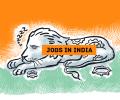
Job postings activity in April witnessed 3 per cent decline sequentially as the country is hit with the second wave of the pandemic leading to lockdowns, according to a report. The data indicates that the employment index saw a decline in job posting activity in April compared to March, by 3 per cent, according to the Monster Employment Index. The overall job postings also witnessed a decline of 4 per cent year-on-year as of April 2021, compared to April 2020.

Predictions of below normal monsoon rains have poured cold water on the bullish growth plans of fast-moving consumer goods companies, which have continued to show robust growth of 17-18 per cent in the face of rising input costs and the economic downturn.
Investment push by the Modi govt and draw-down of UPA's welfare schemes to put pressure on demand.

Google is followed by Sony India who won the runner-up position.

The earnings are, however, expected to be down around 2 per cent on a sequential basis due to pent-up demand getting exhausted and the adverse impact of rising metals and energy prices on consumer goods and manufacturing companies.

Improve speed of delivery, introduce smaller packs, create greater value

The top five most trusted brands are Samsung Mobiles, Sony, LG, Nokia and Tata.

After a turnaround in performance by Indian equity markets since July that has seen the S&P BSE Sensex and the Nifty50 wipe out the year-to-date losses, analysts suggest investors start nibbling into stocks that are focused on the domestic economy. While they say intermittent corrections, led by policies of global central banks and other economic data, cannot be ruled out, analysts expect India's relative outperformance among global equity markets to continue as it looks better placed with a healthy economic recovery, and remains one of the fastest growing major economies. In this backdrop, Neeraj Chadawar, head of quantitative equity strategy at Axis Securities, believes that amid global slowdown, aggressive tightening by the central banks, and preference for domestic interests first (by the local government), export-oriented themes are likely to be muted or will deliver conservative returns in the near-term.

Lakme, India's first make-up and beauty brand, turned 70 this year and is also present in Hindustan Unilever's club of brands with a turnover of over Rs 1,000 crore. Over the past seven decades, the brand has evolved and is no longer just a beauty brand, but has also transformed into a skincare brand. Lakme has increased its digital presence as well as innovations and now sees a third of its growth come from new innovations.

The third-quarter financials didn't excite market watchers. But equity investors can still make money if they invest in the right stocks.

Benchmark indices failed to hold on to early gains and closed in the red for the seventh straight session on Thursday, with participants remaining in wait-and-watch mode ahead of the RBI's interest rate decision. Unabated selling by foreign funds added to the pressure, though a modest recovery in the rupee cushioned the fall, traders said. After rallying in early trade, the 30-share BSE Sensex came under selling pressure in the afternoon session and closed 188.32 points or 0.33 per cent lower at 56,409.96.

Pharmaceuticals, along with software and services, also added the most new entrants on the rich list 2018.

After a strict lockdown impacting sales, India has returned to the growth path again, Anglo-Dutch FMCG major Unilever has said. The return of growth of India business, along with Brazil and continued recovery in China, helped the company's emerging markets clock a growth of 5.3 per cent in the September 2020 quarter.

The top driver for the Indian workforce while choosing an employer are salary and employee benefits, followed by work-life balance and job security.

Of the 1,145 offers made this year, consulting firms made up 34 per cent, followed by banking, financial services and insurance, pharma/healthcare, IT/ITeS and FMCG/retail.

Equity indices chalked up losses for the second straight session on Monday, in tandem with a bearish trend overseas as ratcheting up of hostilities in Ukraine and prospects of further rate hikes by the US Fed soured global risk sentiment. The rupee slipping to another all-time low against the US dollar amid foreign fund outflows added to the gloom, traders said. After tumbling over 800 points in intra-day trade, the 30-share BSE Sensex clawed back some lost ground to end 200.18 points or 0.34 per cent lower at 57,991.11.
Mature markets globally have either become saturated or have slowed down. The emerging markets have therefore become strategically important for these companies. The contribution of Indian operations to the global sales of these multinational behemoths is still small -- 1.5 to 3 per cent -- but this share is bound to grow given the buoyancy in the Indian market.

While weather forecasters remain divided on how the monsoons will play out in India over the next few months, analysts believe the news at the current juncture - at best - can trigger a knee-jerk reaction in the markets. They believe it is too early to say whether the sub-par monsoon on account of El Nino can seriously dent the market sentiment in the short-to-medium term. "These are just initial forecasts and we will have another round / status update from the weather forecasters a month down the line.

Bajaj Finance was the top gainer in the Sensex pack, rising around 5 per cent, followed by IndusInd Bank, Tata Steel, ITC, Bajaj Finserv, Tech Mahindra and Infosys. On the other hand, Maruti, Bajaj Auto, Nestle India, PowerGrid and Axis Bank were among the laggards.

Benchmark indices started the trade on a weak note on Wednesday with the Sensex falling 564.77 points, following feeble global market trends and persistent foreign capital outflows. The 30-share BSE Sensex was trading 564.77 points lower at 52,612.68. The NSE Nifty dipped 162.4 points to 15,687.80. Among the Sensex pack, IndusInd Bank, Hindustan Unilever, Bajaj Finserv, Titan, Kotak Mahindra Bank and Bajaj Finance were the major laggards in early trade.
Second-ranked L&T has been rated highest on leadership

It has been a slow 2022 thus far for the primary markets. In the last 8 months, only 16 companies have raised Rs 40,311 crore via the initial public offer (IPO) route, data from PRIME Database suggests. In comparison, 63 companies had raised a cumulative Rs 1.18 trillion via the IPO route in 2021. A large part of the funds raised in 2022 were on account of the two IPOs - Life Insurance Corporation of India (LIC) and logistics firm Delhivery - that raised a total of over Rs 26,000 crore between themselves.

HCL Tech was the top gainer in the Sensex pack, rising over 4 per cent, followed by HDFC Bank, Infosys, NTPC, Nestle India, TCS and HUL. NSE Nifty surged 337.80 points to 14,845.10.

'Very few of small investors stay invested for those three or four or five years.' 'If there's like a six month, one-year period when market is not doing well, you exit.' 'After the market has run up, you get in again.' 'This way you will never make returns.'

India on track to be third largest consumer economy by 2025.

June indicates a change in trend from previous quarters in terms of how much companies are spending on employees. The worst hit sectors included steel, air transport service and automobile firms.

According to the Icra report, earnings before interest, tax, depreciation and amortisation margin of its sample declined by 44 basis points on a YoY basis and 23 basis points on a quarter-on-quarter basis to 16.6 per cent.

India needs a rebooting and the country must give "value to common sense" to tackle issues like slowdown of growth, feels CEO of Swiss FMCG giant Nestle, Paul Bulcke.

The cooking oil national industry body -- Solvent Extractors' Association (SEA) of India has suggested immediate initiation of government to government (G2G) dialogue with Indonesia on the proposed palm oil export ban from April 28 by them as it would have an adverse repercussions in India. Indonesia, which is the world's largest producer of palm oil and meets nearly 50 per cent of the total palm oil requirement in India annually, had announced to ban exports till further notice apparently to contain edible oil prices in their domestic market. "We have suggested our government initiate dialogue with Indonesian counterparts at the highest diplomatic level on the cooking oil export ban.

The dairy major is transforming into a full-fledged F&B and fast moving consumer goods (FMCG) player, reports Vinay Umarji.

Amway maintains the action was related to a case in 2011 and it has been cooperating with the investigative agency.

Consumer-focused companies have been left with few options but to increase the prices of their products as input costs mount because of various factors, including supply chain disruptions. This has been affecting monthly household budgets. Prices of scores of items -- from spices to soaps to rice -- have increased in the past year.

To take the Rs 49,000 crore ITC to the top slot in the highly competitive FMCG business will require some aggression.

Nestle India, the Indian subsidiary of the Swiss multinational FMCG giant Nestle, had to face on social media the wrath of consumers, who accused the company of hurting religious sentiments by using the sacred images on Kitkat wrappers.
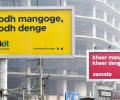
'The focus on easier access and faster delivery is creating a new consumption pattern that allows consumers to satisfy their last-minute cravings and restock essentials at the click of a button.'

With the festival sales in full swing, e-commerce firms are ramping up hiring to meet the increasing consumer demand. Close to 300,000 new jobs have been created in the sector so far and over 500,000 more jobs are expected to be added till Diwali, according to a report by TeamLease. The demand for gig workers is, however, not restricted to tier-1 cities. Tier-2 and tier-3 cities have seen an increase of 40 per cent, with a higher demand for delivery workers, according to a TeamLease report.
